
Case Study: Magnefast™ Wear Liners Extend Service Life at Fortescue Iron Bridge
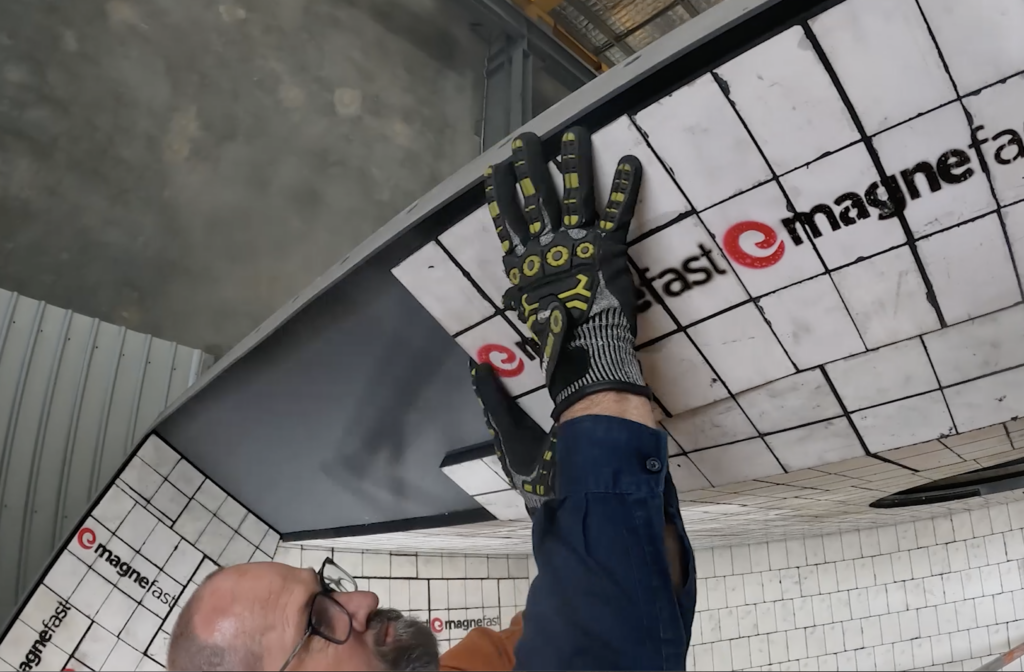
A complex air classifier. Severe abrasive wear. Strict weight limitations. And a maintenance process that previously required the entire unit to be removed from site. The site needed a repair solution that could be installed quickly in a restricted access area without drilling into the existing chute or extending the shutdown. At Fortescue’s Iron Bridge […]
Technical Bulletin Series: The Hidden Forces Shortening Your Lagging Life
When pulley lagging on carry-side conveyor pulleys begins failing sooner than expected, the first assumption is often that the lagging has reached the end of its life—or that a different lagging product is needed. In many cases, neither is true. Across mining operations, Elastotec has identified a consistent pattern on pulleys in contact with the […]
Case Study: Eliminate Chute Build-Up Without a Complete Rebuild

When a newly installed SCAT Drop Chute at one operation began experiencing severe material build-up, it quickly created a costly maintenance challenge. Restricted material flow accelerated wear, eventually resulting in a large hole in the BIS400 chute wall. The site needed a repair solution that could be installed quickly in a restricted access area without […]
Case Study: Iron Ore Export Port Uses Next-gen Magnefast™ Technology to Eliminate 14-week Wear Liner Replacement

For many bulk handling operations, transfer chute maintenance is an unavoidable part of every shutdown. Wear liners require constant attention, temporary repairs consume valuable labour, and maintenance teams are often forced to focus on keeping assets operational rather than improving long-term reliability. One major iron ore export port in Western Australia faced exactly this challenge. […]
Lagging Select™ Training Session: Engineering-Based Pulley Lagging Selection

Pulley lagging plays a critical role in conveyor reliability, yet many lagging selection decisions are still based on historical practices, assumptions or generic specifications. Join Elastotec for an exclusive online training session introducing Lagging Select™, the engineering research-based performance optimisation tool developed jointly with Conveyor Dynamics Inc. (CDI) and the University of Newcastle. Learn how […]
Case Study: From 13 Weeks to 104+ Weeks: Unlock Higher Production with Magnefast™

Taking Wear Liners From a 13 Week Replacement Cycle to >104+ Weeks — What Changed? Most chute maintenance problems don’t begin with failure. They begin with wear patterns, material flow issues and maintenance constraints that slowly compound over time. At one high-volume lithium operation, frequent liner replacements, material hang-up, hot work and tight 48-hour shutdown […]
New Mine Start-Up: Getting Wear Protection Right From Day One

As new mining operations move from construction into production, the decisions made during the design and commissioning phase can have a long-term impact on reliability, maintenance efficiency and operating costs. Elastotec recently completed a major materials handling wear protection project in conjunction with a fabrication partner in Thailand, supporting the supply chain build for Magnefast™ […]
Case Study: How Engineered Ceramic Protection Delivered a 400% Increase in Service Life

In underground mining, ventilation systems are critical to safe and efficient operations but they are also highly exposed to abrasive wear. In this recent project, Elastotec, in collaboration with Carters Engineering, addressed persistent wear issues on large ventilation fan impellers operating in harsh underground conditions. The result was a step-change improvement in reliability, safety and […]
Why Product Quality and a Proven Application Procedure Are Critical

When it comes to pulley lagging performance, the difference between success and failure is rarely visible on day one. It lies beneath the surface — in product quality, surface preparation and whether a proven application procedure has been followed. A recent project at a large underground coal mine in NSW clearly demonstrates why these factors […]
Case Study: Fast, Reliable Wear Protection for Continuous Gold Mine Operations

A major gold leach wet process plant running continuously 24/7 for three years since commissioning recently faced a critical challenge. Repeated failures of cold-bonded rubber lining had led to serious wear issues, including breakthroughs in the hopper steel skin. With the plant unable to stop, temporary welded steel patches were used to keep operations running. With the first planned […]
