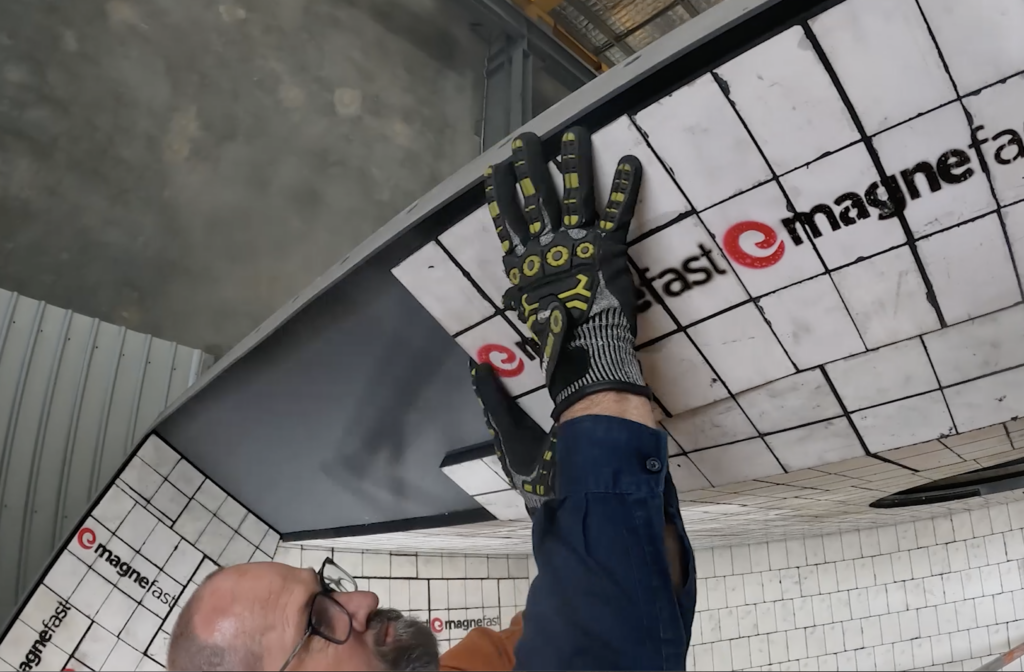
When it comes to pulley lagging performance, the difference between success and failure is rarely visible on day one. It lies beneath the surface — in product quality, surface preparation and whether a proven application procedure has been followed.
A recent project at a large underground coal mine in NSW clearly demonstrates why these factors are critical.

The Scenario: Two Identical Pulleys, Two Very Different Outcomes
An Elastotec Approved Applicator was awarded a job to re-lag two identical Non-Drive pulleys using Cold Bond Elastotec Crowned Ceramic Lagging. The objective was to improve conveyor belt tracking.
Both pulleys:
Were manufactured in late 2024
Had been stored as on-site spares
Had never been placed into service
Appeared to be in “as new” condition
However, there was one key difference: One pulley had been lagged by an Elastotec Approved Applicator using Elastotec pulley lagging. The other had been lagged by a different contractor using a competitor’s product.
Stripping the Lagging Revealed the Truth
When the existing lagging was stripped from both pulleys, the difference in bond quality became immediately evident.
Competitor Lagging
The pulley lagged with the competitor’s product showed approximately 90% primer-to-steel failure. Large strips of lagging could be removed with minimal force, consistently across the entire pulley surface.
This type of failure indicates a poor bond between the lagging system and the pulley shell. Had this pulley been put into service, there would have been a very high likelihood of premature lagging debonding.
In an underground coal environment, such a failure could have resulted in:
Unplanned shutdowns
Emergency maintenance
Lost production
Increased safety risk

Elastotec Lagging
In contrast, the pulley lagged with Cold Bond Elastotec lagging showed approximately 80% rubber tear. The lagging could not be removed in strips and had to be cut into narrow sections so sufficient force could be applied to strip it from the shell.
Rubber tear is a critical indicator of success, it confirms that the bond between the lagging and the pulley shell is stronger than the rubber itself.
This eliminates the risk of debonding and ensures long-term performance in service.
Why the Results Were So Different
The outcome was not a coincidence.
The Elastotec Approved Applicator followed a proven, certified application procedure, which includes critical steps such as:
Correct pulley shell preparation
Proper metal primer application
Adherence to cure times and installation standards
In addition, Elastotec lagging products incorporate a built-in CN rubber bonding layer, designed specifically to maximise adhesion between the lagging and the steel pulley shell.
This combination of high-quality product and disciplined application is what delivers reliable, repeatable results.

The Cost of Getting It Wrong
Pulley lagging failures don’t just affect components, they impact:
Conveyor reliability
Maintenance schedules
Production continuity
Overall operating cost
Failures in underground environments are particularly disruptive, often occurring without warning and requiring urgent intervention.
Quality and Process Matter
This real-world example reinforces a critical message: Using a premium product alone is not enough — it must be applied by trained professionals who follow a proven procedure.
The difference between primer failure and rubber tear is the difference between downtime and dependable operation.
How Would Your Operation Benefit?
How would your operation benefit from eliminating pulley lagging failures before they happen?
Partnering with Elastotec Approved Applicators ensures:
Proven products
Certified installation
Reduced risk of premature failure
Improved conveyor performance
Looking to improve downtime in your operations? Contact our Pulley Lagging team to discover better lagging solutions.