The Elastotec aim is no pulley failures due to inadequate pulley lagging. Compare the difference between cold bonded and hot vulcanised lagging to see that hot vulcanised lagging is A GOOD BUSINESS DECISION.
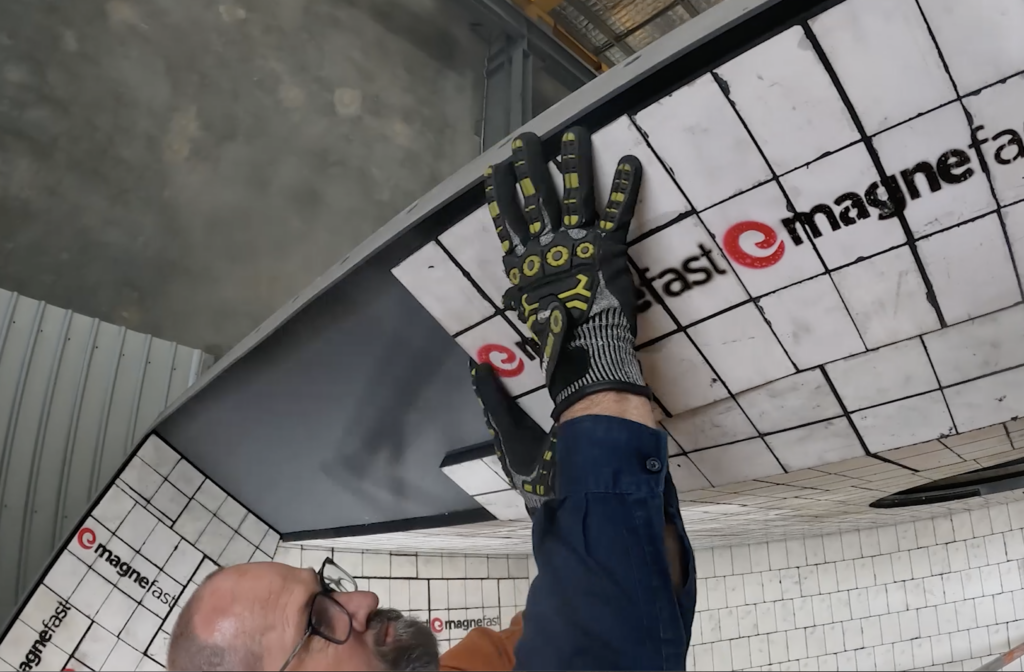
Case Study: Magnefast™ Wear Liners Extend Service Life at Fortescue Iron Bridge
A complex air classifier. Severe abrasive wear. Strict weight limitations. And a maintenance process that previously required the entire unit to be removed from site. The site needed a repair...
Elastotec Supports Industry with Proven Slide Lagging Solution
As conveyor operators continue to prioritise maintenance efficiency and asset reliability, many are taking the opportunity to review their pulley lagging systems and explore solutions that simplify maintenance without compromising...
Technical Bulletin Series: The Hidden Forces Shortening Your Lagging Life
When pulley lagging on carry-side conveyor pulleys begins failing sooner than expected, the first assumption is often that the lagging has reached the end of its life—or that a different...
Case Study: Eliminate Chute Build-Up Without a Complete Rebuild
When a newly installed SCAT Drop Chute at one operation began experiencing severe material build-up, it quickly created a costly maintenance challenge. Restricted material flow accelerated wear, eventually resulting in...
Advancing Pulley Lagging and Wear Protection Technology Elastotec is proud to be presenting at the International Conference on Bulk Materials Handling (ICBMH) 2026, taking place from 7–9 July 2026 at...
Case Study: Iron Ore Export Port Uses Next-gen Magnefast™ Technology to Eliminate 14-week Wear Liner Replacement
For many bulk handling operations, transfer chute maintenance is an unavoidable part of every shutdown. Wear liners require constant attention, temporary repairs consume valuable labour, and maintenance teams are often...